Introduction
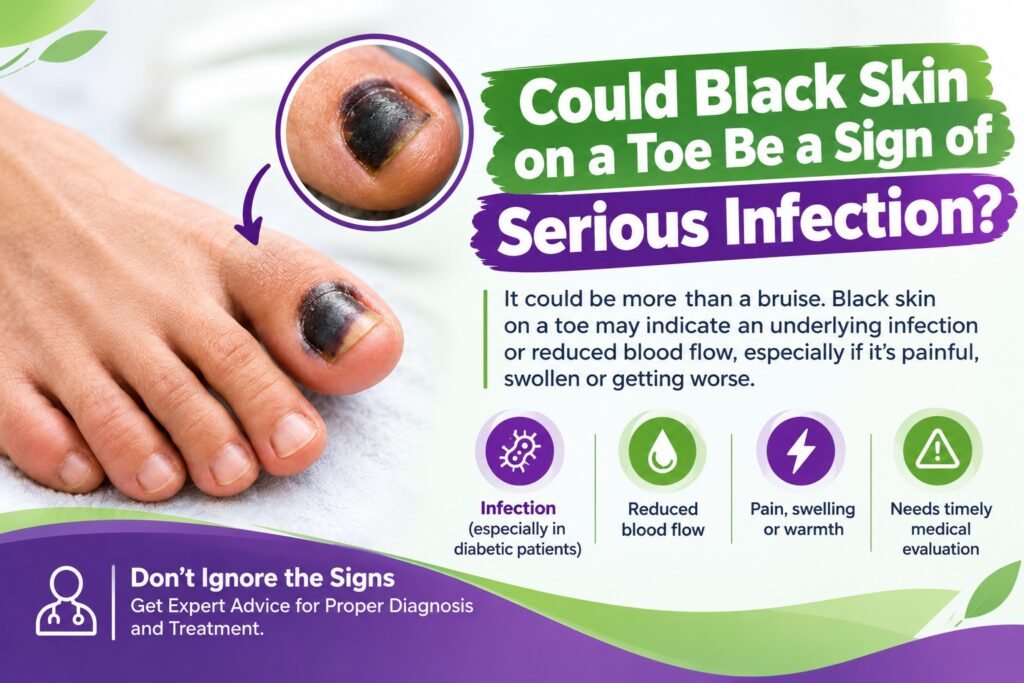
When skin turns black, it usually means the cells there have died. Doctors call this necrosis. When the dead area is larger and involves deeper tissue, it is called gangrene.
Skin needs a steady supply of blood to stay alive. If that supply drops, or an infection damages the tissue, the skin darkens, first to purple or brown, then to black.
The colour is a signal. It tells you the toe needs medical attention soon.
Why Does Diabetes Make This More Likely?
High blood sugar, over the years, harms two things in your feet: the nerves and the blood vessels.
- Damaged nerves mean you may not feel a cut, blister, or pressure sore. A small wound can go unnoticed for days.
- Narrowed blood vessels mean less blood, oxygen, and healing power reaches your toes.
- High sugar levels also make it easier for germs to grow and harder for your body to fight them.
Put these together and a tiny injury can turn into an ulcer, then an infection, then dead tissue. Many people say, “But it never hurt.” That is exactly the problem with diabetic nerve damage.
Is Black Skin Always a Serious Infection?
Not always, but it always needs to be checked.
Black skin on a toe can come from:
- Poor blood supply (called ischaemia), which can cause dry, shrivelled, black tissue with no obvious pus
- Infection, where the area may be swollen, warm, red, or leaking fluid
- A blood clot or injury that cut off circulation
- Rarely, a skin or nail condition, such as a dark patch under the toenail that needs to be checked to rule out skin cancer
Only a doctor can tell these apart. Some are urgent within hours, others within days. Either way, guessing at home is risky.
Which Warning Signs Should Never Be Ignored?
Get medical help quickly if the dark skin comes with any of these:
- Redness or swelling spreading up the foot
- Pus, or a foul smell from the area
- Fever, chills, or feeling suddenly unwell
- Severe pain, or a toe that is cold and numb
- A wound that has not healed for two weeks or more
- Blood sugar that is suddenly hard to control
If you have fever along with a dark toe, treat it as an emergency and go to the nearest hospital.
What Should You Do Right Away?
Take a breath. Many people panic or feel guilty at this stage. Neither helps, and this is not your fault.
Here is a simple plan:
- Stop putting pressure on the foot. Rest it as much as you can.
- Keep the area clean and dry. Cover it loosely with a clean dressing.
- Do not cut, pierce, or scrub the black area, and do not apply home remedies, hot water, or strong antiseptics.
- Do not pop blisters or peel skin.
- Check your blood sugar and take your usual medicines.
- See a diabetic foot specialist as soon as possible. Do not wait to see if it improves.
How Is It Treated, and When Is Surgery Needed?
Treatment depends on what is causing the problem and how deep it goes. The doctor will usually start with an examination, blood tests, and often a scan or Doppler test to check blood flow.
Non-surgical care may include:
- Antibiotics for infection
- Careful wound cleaning and dressings
- Blood sugar control
- Medicines or procedures to improve blood flow
- Special footwear or offloading devices to take pressure off the area
Surgery may be needed when:
- Dead tissue must be removed so healing can begin (called debridement)
- Infection has reached the bone or is spreading
- Blood flow needs to be restored through a procedure such as angioplasty or bypass
- A toe, or part of the foot, must be removed to stop infection reaching the rest of the leg
This last option is understandably frightening. But the goal of diabetic foot surgery is to save as much of your foot as safely possible, protect your ability to walk, and keep infection from becoming life-threatening. Removing a small area early is often far better than losing more later.
A team approach works best, with a surgeon, diabetes physician, vascular specialist, and wound-care nurse all involved. If you are looking for diabetic foot surgery in Ahmedabad, ask whether the centre offers this kind of coordinated care.
What Does Recovery Look Like?
Recovery is different for everyone, but here is what you can generally expect:
- Wound healing may take several weeks to a few months.
- Dressing changes will be needed regularly, at home or in the clinic.
- Rest and reduced weight-bearing help the area heal.
- Tight blood sugar control speeds up recovery.
- Follow-up visits let your doctor catch problems early.
Be patient with yourself. Feeling worried or low during recovery is common, so talk to your family and care team. Support matters as much as medicine.
How Can You Prevent This From Happening?
Most serious diabetic foot problems can be prevented or caught early. A few habits make a big difference:
- Look at your feet every day, including between the toes and the soles. Use a mirror or ask a family member to help.
- Wash and dry your feet gently, especially between the toes.
- Moisturise dry skin, but not between the toes.
- Never walk barefoot, even at home.
- Wear soft, well-fitting shoes and check inside them for stones or rough seams.
- Trim nails straight across, or let a professional do it.
- Keep blood sugar in the range your doctor advises.
- Quit smoking, since it further reduces blood flow.
- Get a foot check at least once a year, and more often if you already have nerve damage.
Final Thoughts
A black toe is a serious sign, but it is not the end of the road. The sooner it is examined, the more choices you and your doctor will have.
If you or someone you love has diabetes and notices dark skin on a toe, please don’t wait. Whether treatment involves dressings, medicines, or diabetic foot surgery in Ahmedabad, expert help early on protects your foot, your mobility, and your independence.
The team at Kosmoplus is here to listen, examine, and guide you and your family through every step. Consider booking a consultation today. A short visit now can make a lasting difference.