Introduction
We’ve all been there. You notice a few extra strands of hair in the shower drain or on your comb, and panic sets in. Your immediate reaction is to browse the internet or visit a local pharmacy to find a quick fix. Before you know it, your bathroom shelf is crowded with expensive anti-hair-fall shampoos, biotin serums, organic oils, and exotic Ayurvedic tonics.
Months go by, you follow every routine religiously, but the mirror doesn’t lie: your hairline is still slowly creeping backward, and the thinning at the crown is becoming harder to hide.
It is a frustrating and emotionally draining cycle. But here is the hard truth that commercial marketing won’t tell you: shampoos cannot bring dead hair follicles back to life. If you are tired of spending money on temporary fixes that yield no real results, it’s time to look at the actual science of hair loss—and understand when it is officially time to switch to a permanent medical solution like a hair transplant.
The Biological Reality: Why Topical Products Fail Chronic Thinning
To understand why your anti-hair-fall shampoo isn’t working, we have to look below the surface of the scalp.
Most hair loss in men (and a significant portion in women) is caused by Androgenetic Alopecia, commonly known as male pattern baldness. This is a genetic condition driven by a hormone called Dihydrotestosterone (DHT).
- The Shrinking Process: DHT binds to genetically susceptible hair follicles, causing them to gradually shrink (miniaturize). Over time, the hair produced becomes thinner, shorter, and more brittle, until the follicle eventually closes up entirely and stops producing hair altogether.
- The Cosmetic Delusion: Shampoos are designed to clean the scalp and hair shafts. Even if they contain active ingredients, they remain on your head for less than two minutes before being rinsed away. They cannot penetrate deep enough into the dermis to alter your genetics or block DHT at the root level.
While a good shampoo can improve the texture of your existing hair and keep your scalp healthy, it cannot stop a genetically programmed receding hairline or regenerate a bald patch.
4 Clear Signs It’s Time to Move from Shampoos to Science
How do you know when it’s officially time to stop experimenting with shelf products and seek clinical intervention? Watch for these four unmistakable signs:
- Your Hairline Has Formed a Visible “M” Shape
If your forehead is expanding and your hair is visibly receding at the temples to form a distinct “M” or “V” shape, you are dealing with structural pattern baldness. Shampoos cannot alter this structural shift; only a hair transplant can lower and redefine a receding hairline.
- You Can See Your Scalp Clearly Under Normal Lighting
When you look in the mirror under normal room lighting or sunlight and your scalp is clearly visible through your hair at the crown or top of your head, the hair follicles have already shrunk drastically.
- You’ve Been Using Topical Treatments for Over Six Months with Zero Progress
The hair growth cycle takes time, but if you have consistently used premium serums, oils, or over-the-counter medical solutions for six months to a year and your hair density is still actively decreasing, your condition has progressed past what topical solutions can manage.
- The Balding Patch Is Smooth and Shiny
If an area on your scalp has gone completely bald, smooth, and shiny, it means the hair follicles in that region are dead. Once a follicle dies, no oil or chemical formula on earth can revive it. The only way to get hair back in that specific area is to physically place a live follicle there through a transplant.
Myths vs. Facts: Unmasking Hair Restoration
Because hair loss is such a widespread concern in India, it is surrounded by countless myths. Let’s look at the scientific facts:
Myth | Fact |
Myth: A hair transplant is highly painful and requires a long hospital stay. | Fact: Modern hair transplants are performed under local anesthesia. The procedure is virtually painless, and patients can comfortably watch a movie or read a book during it, returning home the very same day. |
Myth: Transplanted hair looks artificial, stiff, or like “doll hair.” | Fact: When executed by a skilled cosmetic surgeon who carefully designs the hairline and matches the natural angle of hair growth, the results are completely seamless and completely indistinguishable from original hair. |
Myth: You can easily lose the transplanted hair again in a few years. | Fact: Hair grafts are harvested from the “safe donor zone” (the back and sides of the head). These specific follicles are biologically resistant to DHT, meaning they are permanent and will continue to grow naturally for a lifetime. |
The Scientific Solution: How Modern Hair Transplants Work
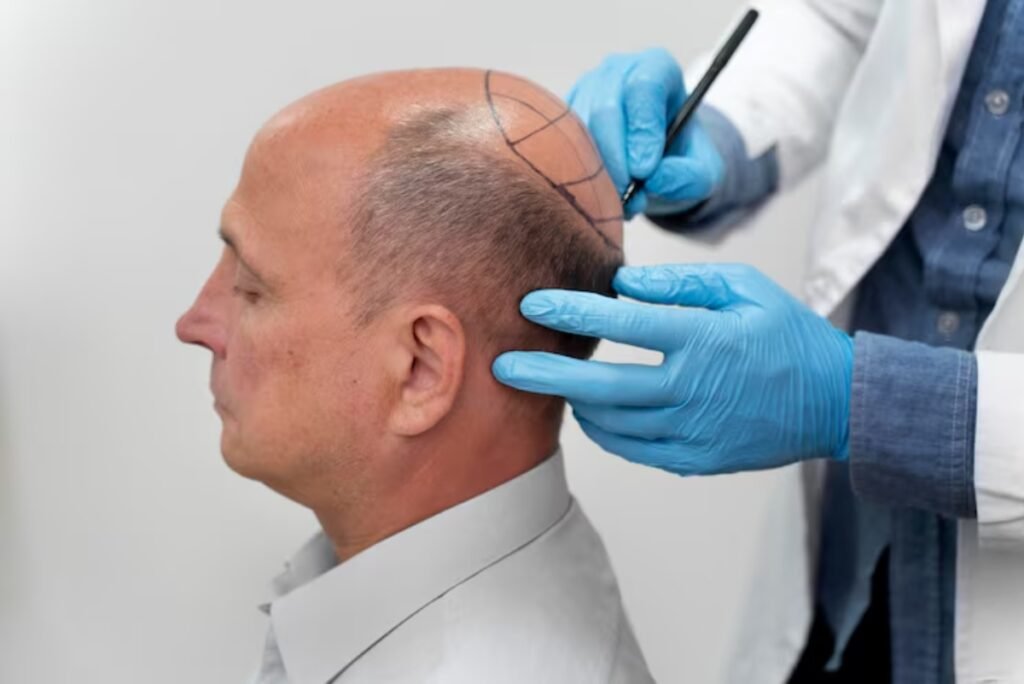
A hair transplant is a highly sophisticated, minimally invasive procedure that redistributes your existing, healthy hair. Using advanced techniques like Follicular Unit Extraction (FUE), individual hair grafts are gently extracted from the dense donor area at the back of your head and meticulously implanted into the thinning or bald areas.
Because it uses your own natural hair, the results are completely authentic. Once the newly implanted grafts take root and grow, you can wash, cut, style, and shave your hair exactly like you used to.
Taking the Right Step for Lifetime Confidence
Your hair is a core part of your identity and self-confidence. Spending years trying unverified commercial products not only drains your finances but also wastes precious time during which your donor hair could be optimally utilized.
If you are ready to break free from the hair-fall product loop and achieve real, visible, and lifetime density, it is crucial to consult a specialized facility. Seeking a professional evaluation at the best hair transplant clinic in Ahmedabad gives you access to qualified medical professionals who can scientifically analyze your scalp, measure your graft requirements, and plan a permanent solution.
By choosing an advanced, trusted center like Kosmoplus Plastic Surgery Hospital, you ensure that your hair restoration journey is handled with maximum clinical precision, utilizing state-of-the-art FUE technology to deliver dense, completely natural-looking results that look great from every angle.
Conclusion
There is a time for cosmetic maintenance, and there is a time for medical science. Shampoos have their place in basic hygiene, but when genetic hair loss begins, they are simply a band-aid on a deeper issue. Investing in a permanent hair transplant isn’t just about restoring hair; it’s about ending the daily anxiety of looking in the mirror, stopping the endless cycle of trial-and-error products, and reclaiming the youthful confidence you deserve.