Introduction
If you wear glasses every day, this is probably one of the first questions you asked your surgeon before booking your rhinoplasty. And it’s a fair one. Your nose is doing double duty here it’s healing from surgery, and it’s also the exact spot where your glasses rest all day. So naturally, you want to know: when is it actually safe to put them back on?
At Kosmo Plus Hospital, Dr. Ankit Shah gets this question in almost every rhinoplasty consultation. Here’s what you need to know, in plain terms.
Why Glasses Are a Problem Right After Surgery
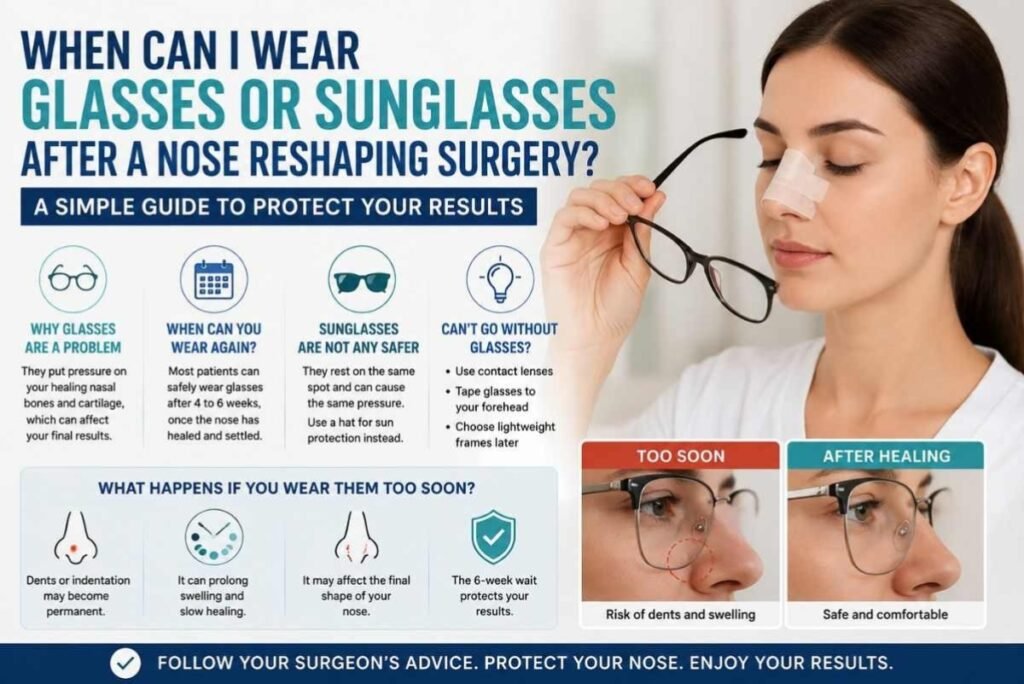
During nose reshaping surgery, the surgeon works on the bone and cartilage that make up your nasal bridge. Right after the procedure, this area is fragile it’s still settling into its new shape, a bit like a fresh cast on a broken bone. Glasses sit directly on the bridge of the nose, and even light, constant pressure from the frame can push against bone and cartilage that hasn’t fully healed yet.
This isn’t about mild discomfort. If pressure is applied too early, it can actually change the shape of your results, cause dents, or slow down healing. So this precaution isn’t just a formality — it genuinely affects your outcome.
So, When Can You Actually Wear Glasses Again?
Most surgeons, including Dr. Ankit Shah, recommend avoiding glasses for about 4 to 6 weeks after surgery. This is the window when the nasal bones are healing and settling into their new position.
By the six-week mark, most patients can go back to wearing their regular frames without issue. That said, this isn’t a one-size-fits-all number. Some patients heal faster, some need a bit more time, especially if the surgery involved reshaping the bridge itself rather than just the tip. Your surgeon will check your healing progress and give you the go-ahead based on how your nose is actually recovering, not just the calendar.
What About Sunglasses?
Here’s the thing people often miss — sunglasses aren’t any safer than regular glasses. They rest on the same spot on your nose and carry the same risk of pressure and shifting. So if you’re heading somewhere sunny during recovery, don’t assume switching to shades solves the problem.
If you need sun protection in the meantime, a wide-brimmed hat or a cap works far better than sunglasses during those first several weeks.
What If You Can't Go Without Glasses?
Not everyone can function without their glasses for over a month, and that’s understandable. A few practical options can help:
- Switch to contact lenses temporarily, if you’re able to wear them. This removes the pressure issue completely.
- Tape your glasses to your forehead using medical tape, so the frame doesn’t touch your nasal bridge at all. Many surgeons, including the team at Kosmo Plus, will show you exactly how to do this during your follow-up visit.
- Use lightweight frames once you do resume wearing glasses, and avoid anything heavy or thick around the bridge for the first couple of months.
If your vision makes it hard to manage without glasses at all, mention this to your surgeon before the surgery. It can sometimes shape decisions around technique or timeline.
What Happens If You Wear Them Too Soon?
If you put your glasses back on before your nose has properly healed, a few things can go wrong. The most common issue is a visible dent or indentation where the frame rests, which can become permanent if it happens early enough in the healing process. It can also prolong swelling in that area and, in some cases, subtly affect the final shape of the bridge.
Basically, the six-week wait isn’t arbitrary — it exists to protect the results you paid for and waited for.
It Depends on Your Specific Surgery
Not all rhinoplasty procedures are the same, and your timeline depends on what was actually done. If your surgery focused mainly on the tip of the nose, you may be able to wear glasses sooner than someone who had bridge reshaping or a hump reduction, since the bridge itself takes longer to stabilize. This is exactly why your surgeon’s individual advice matters more than general timelines you might read online.
Talk to Your Surgeon Before You Assume Anything
Every nose heals a little differently, and Dr. Ankit Shah and the team at Kosmo Plus Hospital track your healing at each follow-up visit rather than giving a blanket timeline to every patient. If glasses are a daily necessity for you, it’s worth bringing this up early, even before your surgery date is booked, so you can plan around it properly.
If you’re considering rhinoplasty and want a clear, honest idea of what recovery will actually look like for your day-to-day life, book a consultation with Dr. Ankit Shah at Kosmo Plus Hospital, Ahmedabad